Keilbein (język niemiecki)

1. Stirnbein (Os frontale)
2. Scheitelbein (Os parietale)
3. Nasenbein (Os nasale)
4. Siebbein (Os ethmoidale)
5. Tränenbein (Os lacrimale)
6. Keilbein (1.1) (Os sphenoidale)
7. Hinterhauptsbein (Os occipitale)
8. Schläfenbein (Os temporale)
9. Jochbein (Os zygomaticum) (1.1)
10. Oberkiefer (Maxilla)
11. Unterkiefer (Mandibula)

1. Sprungbein (Talus)
2. Fersenbein (Calcaneus)
3. Kahnbein (Os naviculare)
4. Keilbein I (2.1) (Os cuneiforme)
5. Keilbein II (2.1) (Os cuneiforme)
6. Keilbein III (2.1) (Os cuneiforme)
7. Würfelbein (Os cuboideum)
2. Fersenbein (Calcaneus)
3. Kahnbein (Os naviculare)
4. Keilbein I (2.1) (Os cuneiforme)
5. Keilbein II (2.1) (Os cuneiforme)
6. Keilbein III (2.1) (Os cuneiforme)
7. Würfelbein (Os cuboideum)
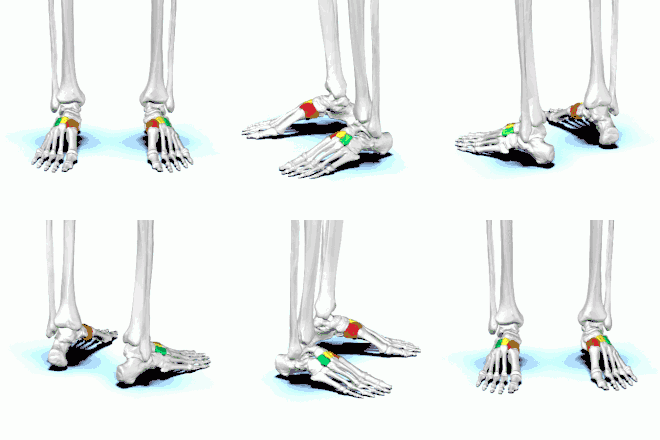
Keilbeine (Ossa cuneiformia) (1.1)
- wymowa:
- znaczenia:
rzeczownik, rodzaj nijaki
- (1.1) anat. kość klinowa
- (2.1) anat. kość klinowata
- odmiana:
- (1-2)[1]
przypadek liczba pojedyncza liczba mnoga mianownik das Keilbein die Keilbeine dopełniacz des Keilbeins
des Keilbeinesder Keilbeine celownik dem Keilbein den Keilbeinen biernik das Keilbein die Keilbeine - przykłady:
- składnia:
- kolokacje:
- synonimy:
- antonimy:
- hiperonimy:
- hiponimy:
- holonimy:
- meronimy:
- wyrazy pokrewne:
- związki frazeologiczne:
- etymologia:
- uwagi:
- źródła:
- ↑ Deklinacja rzeczowników w jęz. niemieckim
This article is issued from Wiktionary. The text is licensed under Creative Commons - Attribution - Sharealike. Additional terms may apply for the media files.