疊
| ||||||||
Translingual
| Traditional | 疊 |
|---|---|
| Shinjitai | 畳 |
| Simplified | 叠 |
Han character
疊 (Kangxi radical 102, 田+17, 22 strokes, cangjie input 田田田一 (WWWM), four-corner 60107, composition ⿱畾冝)
References
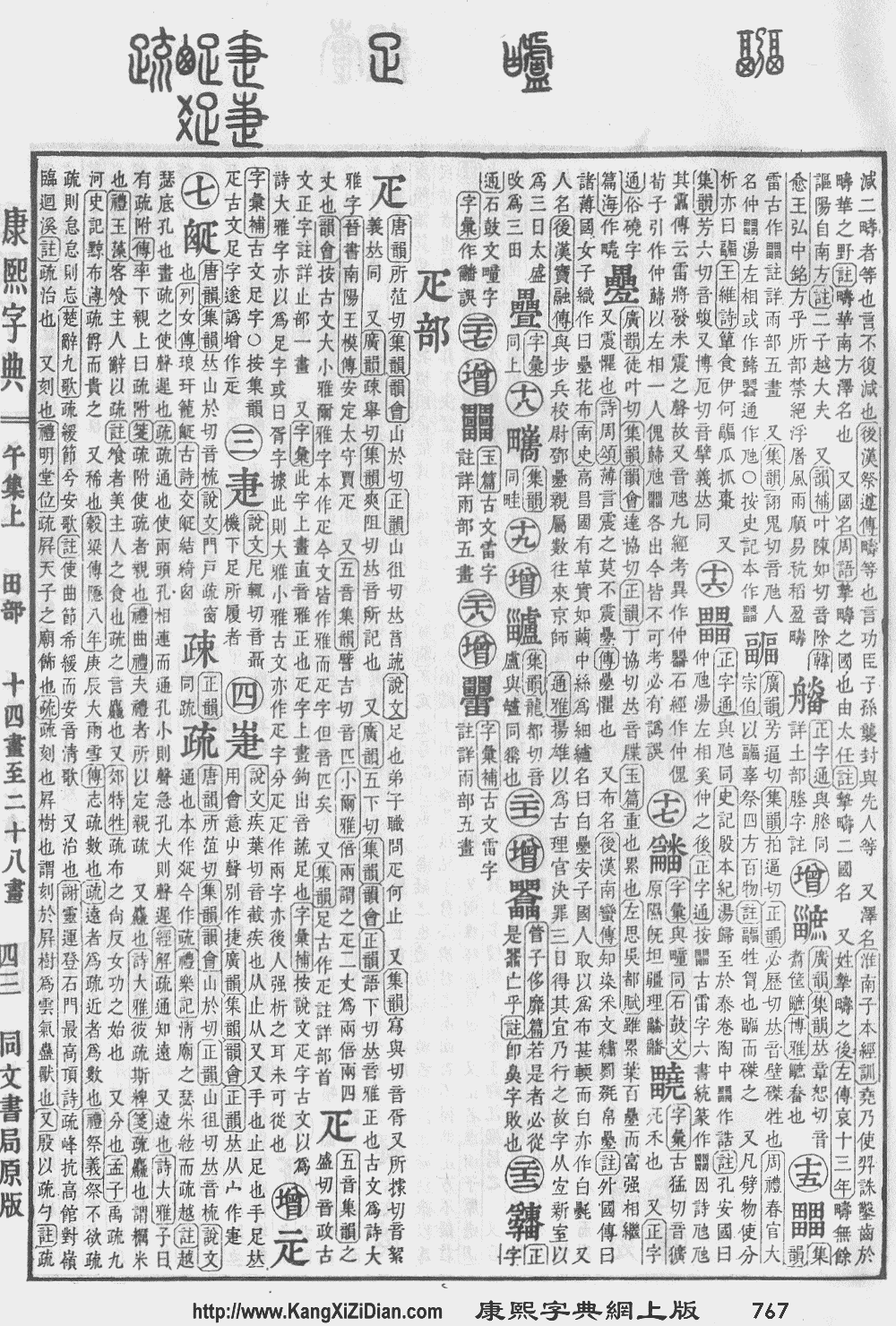
- Kangxi Dictionary: page 767, character 9
- Dai Kanwa Jiten: character 21983
- Dae Jaweon: page 1177, character 14
- Hanyu Da Zidian (first edition): volume 4, page 2555, character 14
- Unihan data for U+758A
Chinese
| trad. | 疊/叠 | |
|---|---|---|
| simp. | 叠 | |
| alternative forms | ||
Glyph origin
Originally as 曡, with 晶 (jīng) on top. Shuowen commented that the shape change was promoted by emperor of the short-lived Xin Dynasty, who deemed the use of three "suns" (日) in this character too empowering - compared to three "fields" (田).
Etymology
From Proto-Sino-Tibetan *g/l-t(y)ap (“fold, layer, pile up, repeat”). Cognate with 褶 (“lined dress”), Tibetan ལྟབ (ltab, “to fold, gather up, to lay or put together”), ལྡེབ (ldeb, “to bend round or back, to turn round, to double down”), ལྡབ (ldab, “to fold up, repeat, do again”).
Pronunciation
Definitions
疊
Synonyms
Compounds
- 一疊聲/一叠声
- 三疊紀/三叠纪 (Sāndié Jì)
- 九疊篆/九叠篆
- 二疊系/二叠系
- 二疊紀/二叠纪 (Èrdié Jì)
- 亞肩疊背/亚肩叠背
- 併疊/并叠
- 堆疊/堆叠 (duīdié)
- 壓肩疊背/压肩叠背
- 套疊/套叠 (tàodié)
- 定疊/定叠
- 屏風九疊/屏风九叠
- 層出疊見/层出叠见 (céngchūdiéxiàn)
- 層巒疊嶂/层峦叠嶂
- 層疊/层叠 (céngdié)
- 層見疊出/层见叠出 (céngxiàndiéchū)
- 山巒重疊/山峦重叠
- 打疊/打叠
- 折疊/折叠 (zhédié)
- 挨肩疊背/挨肩叠背
- 挺胸疊肚/挺胸叠肚
- 摺疊/折叠 (zhédié)
- 摺疊扇/折叠扇
- 琴心三疊/琴心三叠
- 疊加/叠加 (diéjiā)
- 疊印/叠印
- 疊句/叠句 (diéjù)
- 疊字/叠字 (diézì)
- 疊層/叠层
- 疊層岩/叠层岩
- 疊層石/叠层石
- 疊嶂/叠嶂
- 疊嶺層巒/叠岭层峦
- 疊巘/叠𪩘
- 疊床架屋/叠床架屋 (diéchuángjiàwū)
- 疊彩/叠彩 (Diécǎi)
- 疊接/叠接
- 疊映/叠映
- 疊棋/叠棋
- 疊次/叠次
- 疊燮/叠燮
- 疊疊/叠叠 (diédié)
- 疊矩重規/叠矩重规
- 疊碼仔/叠码仔 (diémǎzǎi)
- 疊羅漢/叠罗汉 (diéluóhàn)
- 疊蓆/叠席 (diéxí)
- 疊被/叠被
- 疊詞/叠词 (diécí)
- 疊韻/叠韵 (diéyùn)
- 稠疊/稠叠
- 積疊/积叠
- 聯肩疊背/联肩叠背
- 腸套疊/肠套叠 (chángtàodié)
- 規重矩疊/规重矩叠
- 連雲疊嶂/连云叠嶂
- 重三疊四/重三叠四
- 重巖疊嶂/重岩叠嶂
- 重疊/重叠 (chóngdié)
- 重裀疊褥/重裀叠褥
- 重規疊矩/重规叠矩
- 重重疊疊/重重叠叠
- 陽關三疊/阳关三叠
- 類疊/类叠
- 鬥疊/斗叠
Korean
Hanja
疊 • (cheop) (hangeul 첩, revised cheop, McCune–Reischauer ch'ŏp, Yale chep)
- This term needs a translation to English. Please help out and add a translation, then remove the text
{{rfdef}}.
Vietnamese
References
- Trần (2004).
- Trần (1999).
- Thiều Chửu (1942).
This article is issued from Wiktionary. The text is licensed under Creative Commons - Attribution - Sharealike. Additional terms may apply for the media files.