喊
| ||||||||
Translingual
Han character
喊 (Kangxi radical 30, 口+9, 12 strokes, cangjie input 口戈竹口 (RIHR), four-corner 63050, composition ⿰口咸)
References
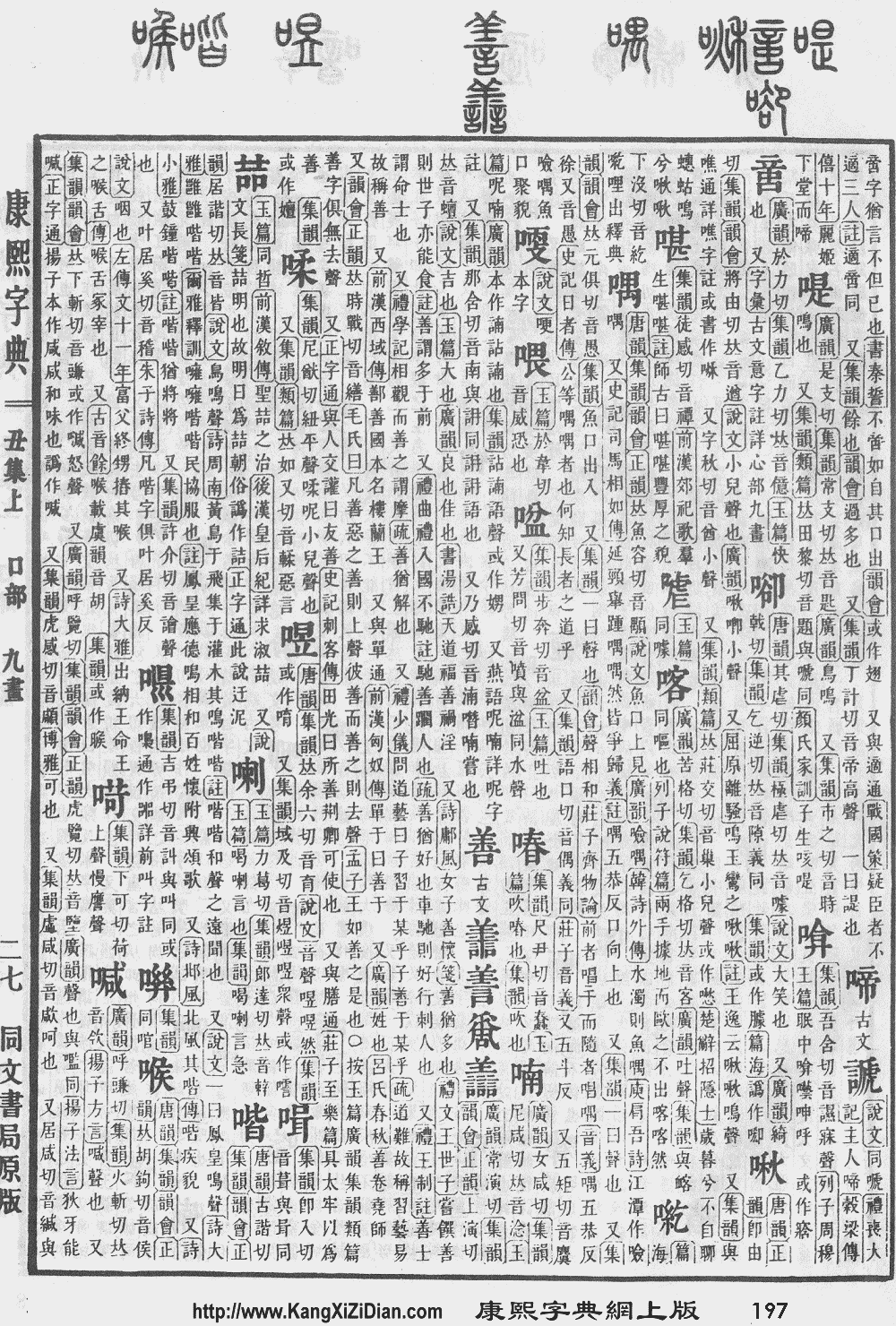
- Kangxi Dictionary: page 197, character 33
- Dai Kanwa Jiten: character 3916
- Dae Jaweon: page 419, character 11
- Hanyu Da Zidian (first edition): volume 1, page 651, character 11
- Unihan data for U+558A
Chinese
| simp. and trad. |
喊 | |
|---|---|---|
Glyph origin
Characters in the same phonetic series (咸) (Zhengzhang, 2003)
| Old Chinese | |
|---|---|
| 感 | *kɯːmʔ |
| 鱤 | *kɯːmʔ |
| 顑 | *kʰɯːmʔ, *ŋɡrɯːms |
| 轗 | *kʰɯːmʔ, *kʰɯːms |
| 撼 | *ɡɯːmʔ |
| 憾 | *ɡɯːms |
| 喊 | *qʰaːmʔ, *qʰrɯːmʔ, *ɡrɯːmʔ |
| 緘 | *krɯːm |
| 瑊 | *krɯːm, *kjum |
| 黬 | *krɯːm, *ŋɡrɯːm |
| 減 | *krɯːmʔ, *ɡrɯːmʔ |
| 羬 | *ŋɡrɯːm, *ɡram |
| 麙 | *ŋɡrɯːm |
| 咸 | *ɡrɯːm |
| 鹹 | *ɡrɯːm |
| 醎 | *ɡrɯːm |
| 諴 | *ɡrɯːm |
| 椷 | *ɡrɯːm |
| 輱 | *ɡrɯːm |
| 鍼 | *ɡam, *ɡram, *kjɯm |
| 箴 | *kjɯm |
| 葴 | *kjɯm |
| 鱵 | *kjum |
Phono-semantic compound (形聲/形声, OC *qʰaːmʔ, *qʰrɯːmʔ, *ɡrɯːmʔ) : semantic 口 (“mouth”) + phonetic 咸 (OC *ɡrɯːm).
Pronunciation
Definitions
喊
- to shout; to cry; to yell; to howl
- 喊叫 ― hǎnjiào ― to shout; to cry out
- to call out for (someone)
- (Cantonese) to cry; to sob; to weep
- 2020, “拼命無恙 [In a Funk]”, 林夕 [Albert Leung] (lyrics), 林家謙 [Terence Lam] (music)performed by 林家謙 [Terence Lam]:
- (regional) to address (someone in the specified way when talking to them); to call
Synonyms
- (to shout):
Dialectal synonyms of 喊 (“to shout; to yell”) [map]
- (to call out):
- (to cry):
Dialectal synonyms of 哭 (“to cry; to weep”) [map]
Compounds
Japanese
Kanji
喊
- This term needs a translation to English. Please help out and add a translation, then remove the text
{{rfdef}}.
Korean
Vietnamese
Han character
喊: Hán Nôm readings: hảm
- This term needs a translation to English. Please help out and add a translation, then remove the text
{{rfdef}}.
References
This article is issued from Wiktionary. The text is licensed under Creative Commons - Attribution - Sharealike. Additional terms may apply for the media files.