| Polyplectron | |||
| Temminck, 1807 | |||
Przedstawiciel rodzaju – wieloszpon szary (P. bicalcaratum) | |||
| Systematyka | |||
| Domena | |||
|---|---|---|---|
| Królestwo | |||
| Typ | |||
| Podtyp | |||
| Gromada | |||
| Podgromada | |||
| Infragromada | |||
| Rząd | |||
| Rodzina | |||
| Podrodzina | |||
| Plemię | |||
| Rodzaj |
Polyplectron | ||
| Typ nomenklatoryczny | |||
|
Polyplectron chinquis Temminck, 1807 (= Pavo bicalcaratus Linnaues, 1758) | |||
| Synonimy | |||
|
| |||
| Gatunki | |||
| |||
Polyplectron – rodzaj ptaków z podrodziny bażantów (Phasianinae) w rodzinie kurowatych (Phasianidae).
Zasięg występowania
Rodzaj obejmuje gatunki występujące w Azji.
Morfologia
Długość ciała 35,5–76 cm; masa ciała 238–910 g (samce są większe i cięższe od samic).
Systematyka
Etymologia
- Polyplectron (Polyplectrum, Polyplectrus): gr. πολυς polus „wiele, dużo”; πληκτρον plektron „ostroga koguta”.
- Diplectron: gr. δι- di- „podwójny”, od δις dis „dwukrotnie”, od δυο duo „dwa”; πληκτρον plektron „ostroga koguta”. Gatunek typowy: Pavo bicalcaratus Linnaues, 1758.
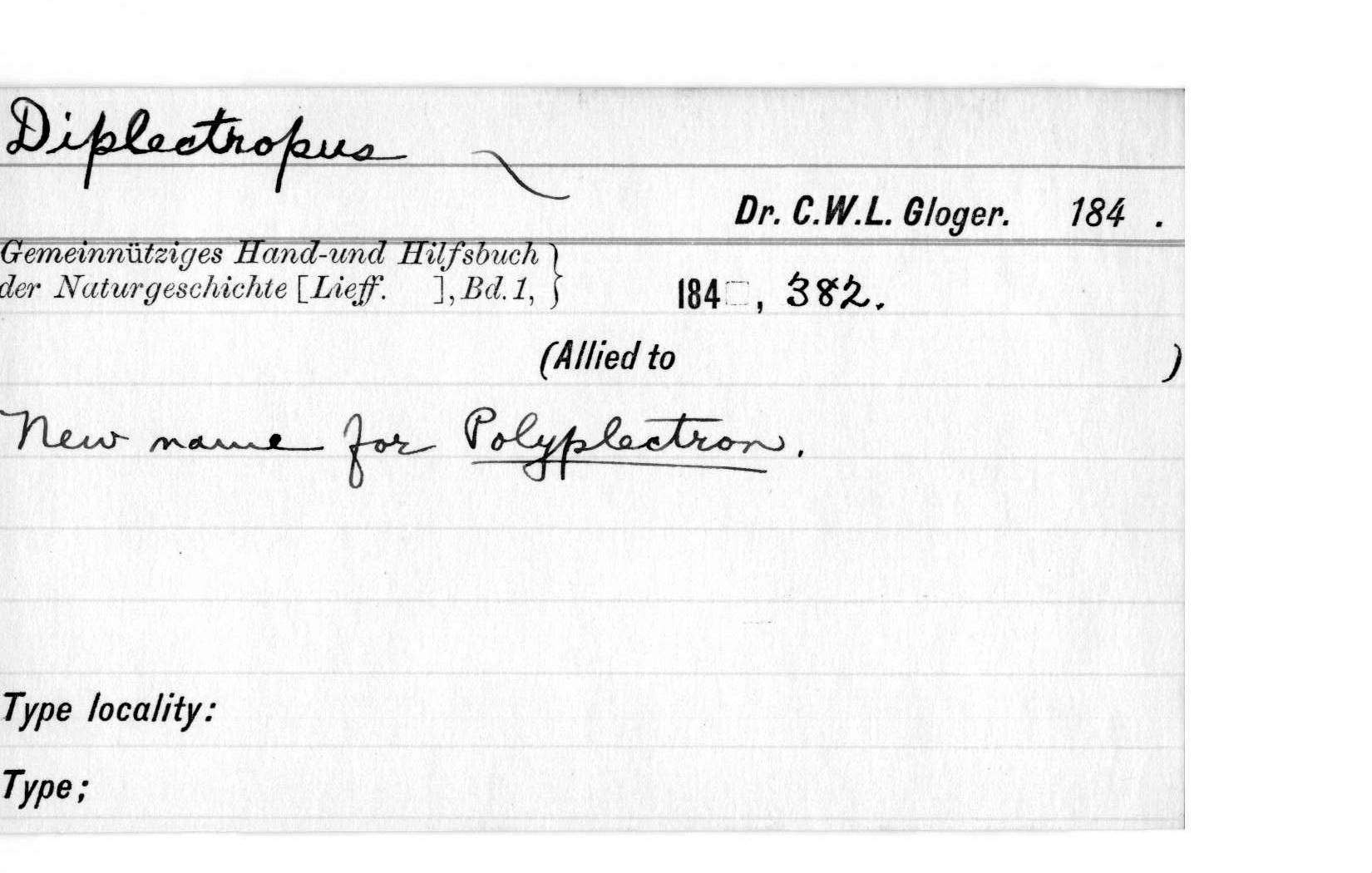
- Diplectropus: gr. δι- di- „podwójny”, od δις dis „dwukrotnie”, od δυο duo „dwa”; πληκτρον plektron „ostroga koguta”; πους pous, ποδος podos „stopa”. Nowa nazwa dla Diplectron.
- Emphania: gr. εμφανης emphanēs „widoczny, jawny”, od εμφαινω emphainō „pokazywać się”. Gatunek typowy: Polyplectron napoleonis Lesson, 1831.
- Chalcurus: epitet gatunkowy Polyplectrum chalcurum Lesson, 1831; gr. χαλκος khalkos „brąz, miedź”; -ουρος -ouros „-ogonowy”, od ουρα oura „ogon”. Gatunek typowy: Polyplectrum chalcurum Lesson, 1831.
Podział systematyczny
Do rodzaju należą następuje gatunkami:
- Polyplectron napoleonis – wieloszpon lśniący
- Polyplectron malacense – wieloszpon pawi
- Polyplectron schleiermacheri – wieloszpon białobrody
- Polyplectron germaini – wieloszpon wietnamski
- Polyplectron katsumatae – wieloszpon hajnański – takson wyodrębniony ostatnio z P. bicalcaratum
- Polyplectron inopinatum – wieloszpon rdzawogrzbiety
- Polyplectron bicalcaratum – wieloszpon szary
- Polyplectron chalcurum – wieloszpon brązowy
Przypisy
- ↑ Polyplectron, [w:] Integrated Taxonomic Information System (ang.).
- ↑ C.J. Temmnick: Catalogue systématique du cabinet d’ornithologie et de la collection de quadrumanes de Crd. Jb. Temminck. Avec un courte description des oiseaux non-decrits suivi d’une nôte d’oiseaux doubles et de quelques autres objets d’histoire naturelle offerte en échange. Amsterdam: Chez C. Sepp Jansz., 1807, s. 149. (fr.).
- ↑ L.J.P. Vieillot: Analyse d’une nouvelle ornithologie élémentaire. Paris: Deteville, libraire, rue Hautefeuille, 1816, s. 50. (fr.).
- ↑ G. Cuvier: Le règne animal distribué d’après son organisation. T. 1. Paris: Chez Déterville, 1817, s. 438. (fr.).
- ↑ G.J. Billberg: Synopsis faunae Scandinaviae. T. 1. Cz. 2: Aves. Holmiae: Ex officina typogr. Caroli Deleen, 1828, s. Tab. A. (łac.).
- ↑ C.W.L. Gloger: Gemeinnütziges Hand- und Hilfsbuch der Naturgeschichte. Breslau: A. Schulz, 1841, s. 382. (niem.).
- ↑ H.G.L. Reichenbach: Avium systema naturale. Das natürliche system der vögel mit hundert tafeln grösstentheils original-abbildungen der bis jetzt entdecken fast zwölfhundert typischen formen. Vorlaüfer einer iconographie der arten der vögel aller welttheile. Dresden und Leipzig: Expedition der vollständigsten naturgeschichte, 1850, s. xxix. (niem.).
- ↑ Ch.L. Bonaparte. Tableaux paralléliques de l’ordre des Gallinacés. „Comptes Rendus Hebdomadaires des Séances de l’Académie des Sciences”. 42, s. 878, 1856. (fr.).
- ↑ F. Gill & D. Donsker: Pheasants, partridges & francolins. IOC World Bird List: Version 8.2. [dostęp 2018-09-05]. (ang.).
- ↑ P.J.K. McGowan: Family Phasianidae (Pheasants and Partridges). W: J. del Hoyo, A. Elliott & J. Sargatal: Handbook of the Birds of the World. Cz. 2: New World Vultures to Guineafowl. Barcelona: Lynx Edicions, 1994, s. 547–548. ISBN 84-87334-15-6. (ang.).
- ↑ The Key to Scientific Names ↓, Polyplectron [dostęp 2018-09-05].
- ↑ The Key to Scientific Names ↓, Diplectron [dostęp 2018-09-05].
- ↑ The Key to Scientific Names ↓, Diplectropus [dostęp 2018-09-05].
- ↑ A.P. Peterson: Richmond Index images -- Genus group names. Zoonomen: Zoological Nomenclature Resource. [dostęp 2019-09-05]. (ang.).
- ↑ The Key to Scientific Names ↓, Emphania [dostęp 2018-09-05].
- ↑ The Key to Scientific Names ↓, Chalcurus [dostęp 2018-09-05].
- ↑ Systematyka i nazwy polskie za: P. Mielczarek & M. Kuziemko: Plemię: Polyplectronini Blyth, 1852 (wersja: 2020-07-21). [w:] Kompletna lista ptaków świata [on-line]. Instytut Nauk o Środowisku Uniwersytetu Jagiellońskiego. [dostęp 2020-09-02].
- ↑ J. Chang, B. Wang, Y.-Y. Zhang, Y. Liu, W. Liang, J.-Ch. Wang, H.-T. Shi, W.-B. Su & Z.-W. Zhang. Molecular evidence for species status of the endangered Hainan Peacock Pheasant. „Zoological Science”. 25 (1), s. 30-35, 2008. DOI: 10.2108/zsj.25.30. PMID: 18275243. (ang.).
Bibliografia
- The Key to Scientific Names, J.A. Jobling (red.), [w:] Birds of the World, S.M. Billerman et al. (red.), Cornell Lab of Ornithology, Ithaca (ang.).
This article is issued from Wikipedia. The text is licensed under Creative Commons - Attribution - Sharealike. Additional terms may apply for the media files.