

The Norwegian railway network consists of 2,552 kilometers (1,586 mi) of electrified railway lines, constituting 62% of the Norwegian National Rail Administration's 4,114 kilometers (2,556 mi) of line.[1] The first three mainline systems to be electrified were private ore-hauling lines. The Thamshavn Line opened in 1909, and remained in revenue use until 1973, after which it was converted to a heritage railway.[2] It is the world's oldest remaining alternating-current railway and the only narrow gauge railway in the country to have been electrified.[3] It was followed by Norsk Transport's Rjukan and Tinnoset Lines two years later,[4] and Sydvaranger's Kirkenes–Bjørnevatn Line in 1922.[5] The Norwegian State Railways' (NSB) first electrification was parts of the Drammen Line in 1922 and the ore-hauling Ofoten Line, which connects to the Iron Ore Line in Sweden, in 1923. The use of El 1 locomotives on the Drammen Line proved a large cost-saver over steam locomotives, and NSB started electrifying other lines around Oslo; from 1927 to 1930, the remainder of the Drammen Line and the continuation along the Randsfjorden and Sørlandet Lines to Kongsvinger were converted, along with the first section of the Trunk Line. In 1935, the Hardanger Line became the first section of new NSB track to be electrified. From 1936 to 1940, NSB electrified the Østfold Line, as well as more of the Sørland Line and the Bratsberg Line, connecting all electric lines west of Oslo.[3]
During the 1940s, NSB electrified the Sørland Line, although the final section from Egersund to Stavanger was not converted until 1956.[3] In 1957, the Kirkenes–Bjørnevatn Line became the only line to remove the electrification and replace the electric locomotives with diesel power.[5] The 1950s saw the electrification of several regional and commuter lines around Oslo, including the Kongsvinger Line, the Trunk Line and the Dovre Line from Lillestrøm to Hamar, the Vestfold Line and the Eastern Østfold Line. This was largely due to NSB's program to remove all steam locomotives, either by electrification or by dieselization. In the late 1950s and 1960s, several to-be electrified lines were operated with diesel locomotives as an interim solution. The 1960s saw the remaining two steam lines in Southern Norway, the Bergen and Dovre Lines, electrified along with the Gjøvik Line. The Bergen Line was completed in 1964 and the Dovre Line completed in 1970. This finished all the planned electrifications, and the authorities deemed the remaining lines unprofitable to electrify because of low traffic. During the 1990s, a new program was attempted, this time to electrify the entire network, but only the Arendal Line was converted before the program was canceled. However, new lines around Oslo, including the Lieråsen and Oslo Tunnels on the Drammen Line and the Gardermoen and Asker Lines, were electrified at the time they opened. Further plans have been launched, in particular the section of the Nordland Line from Trondheim to Steinkjer, which is part of the Trøndelag Commuter Rail, and the Meråker Line, which connects to the electrified Central Line in Sweden.[6]
In 2008, electric traction accounted for 90% of the passenger kilometers, 93% of the tonne kilometers and 74% of the energy consumption of all trains running in Norway, with the rest being accounted for by diesel traction.[7] Technology for electric railways was demonstrated in Germany in 1879;[8] the first revenue line took electric traction into use in 1881.[9] The first electric industrial railway in Norway opened in 1892 at Skotfos Bruk near Skien. Two years later, parts of the Oslo Tramway were electrified.[10] The first alternating current (AC) line became operational in 1892, while the first line to use a single-phase, single overhead wire power supply opened in Germany in 1903.[11] In 1912, all German railways agreed to use the 15 kV 16.7 Hz AC standard, which was later adopted first by Sweden and then by NSB.[11] Several of the private lines that preceded NSB's electrification chose different standards. Sydvaranger chose to install the only mainline direct current (DC) and third rail system.[3]
Timeline

— electrified lines
— non-electrified lines
— disused or heritage lines
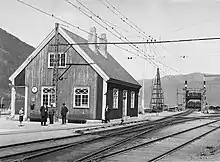

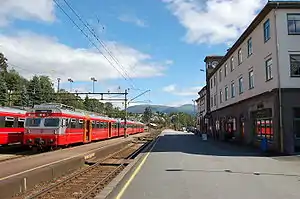
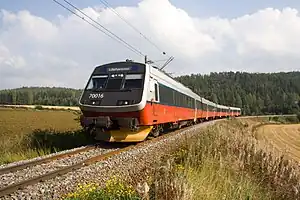


The following list contains a chronology of when the various sections of mainline railway lines were electrified. The list excludes industrial and short branch lines, as well as systems installed at ports and yards. The list contains the date when the electrification was taken into regular use on each section.[12] It also notes if a section was opened as an electric railway, and if the line was prepared as an electric line, but where this was not taken into use immediately. The list contains the line and section to be electrified,[12] and its length. The length indicates the length of the mainline section at the time of electrification. Due to changes of routes and shortening of lines, the current length of sections may be shorter. The sixth column shows the electrification system, including voltage and frequency in case of AC and no frequency in case of DC.
| † | Opened as electric |
|---|---|
| †† | Planned as electric |
| * | Private |
| Date | Line | Section | Length (km) |
Length (mi) |
System | Ref(s) |
|---|---|---|---|---|---|---|
| 10 July 1908† | Thamshavn* | Thamshavn–Svorkmo | 19.3 | 12.0 | 6.6 kV 25 Hz AC | [2][13] |
| October 1908† | Thamshavn* | Svorkmo–Løkken | 6.0 | 3.7 | 6.6 kV 25 Hz AC | [2][13] |
| 11 July 1911††[note 1] | Tinnoset* | Notodden–Tinnoset | 30.0 | 18.6 | 10 kV 16+2⁄3 Hz AC | [4][14] |
| 30 November 1911††[note 2] | Rjukan* | Rjukan–Mæl | 16.0 | 9.9 | 10 kV 16+2⁄3 Hz AC | [4][14] |
| 23 December 1920 | Kirkenes–Bjørnevatn* | Kirkenes–Bjørnevatn | 7.5 | 4.7 | 750 V DC | [5][15] |
| 26 November 1922 | Drammen | Oslo V – Brakerøya | 50.8 | 31.6 | 15 kV 16+2⁄3 Hz AC | [16] |
| 11 July 1923 | Ofoten | Narvik–Riksgränsen | 41.9 | 26.0 | 15 kV 16+2⁄3 Hz AC | [17] |
| 1 September 1927 | Trunk | Oslo Ø – Lillestrøm | 21.0 | 13.0 | 15 kV 16+2⁄3 Hz AC | [18] |
| 15 October 1928 | Loenga–Alnabru | Loenga–Alnabru | 7.3 | 4.5 | 15 kV 16+2⁄3 Hz AC | [19] |
| 10 April 1929 | Sørlandet | Drammen–Kongsberg | 48.6 | 30.2 | 15 kV 16+2⁄3 Hz AC | [20] |
| 6 May 1930 | Drammen | Brakerøya–Drammen | 2.4 | 1.5 | 15 kV 16+2⁄3 Hz AC | [21] |
| 1 April 1935† | Hardanger | Voss–Granvin | 27.5 | 17.1 | 15 kV 16+2⁄3 Hz AC | [3][22] |
| 29 January 1936 | Sørlandet | Kongsberg–Hjuksebø | 36.9 | 22.9 | 15 kV 16+2⁄3 Hz AC | [23] |
| 7 May 1936 | Bratsberg | Notodden–Borgestad | 60.6 | 37.7 | 15 kV 16+2⁄3 Hz AC | [24] |
| 9 December 1936 | Østfold | Oslo Ø – Ljan | 7.2 | 4.5 | 15 kV 16+2⁄3 Hz AC | [25] |
| 18 January 1937 | Østfold | Ljan–Kolbotn | 5.6 | 3.5 | 15 kV 16+2⁄3 Hz AC | [25] |
| 1 September 1939 | Østfold | Kornsjø–Riksgrensen | 1.0 | 0.6 | 15 kV 16+2⁄3 Hz AC | [26] |
| 10 September 1939 | Østfold | Halden–Kornsjø | 32.5 | 20.2 | 15 kV 16+2⁄3 Hz AC | [27] |
| 24 September 1939 | Østfold | Kolbotn–Ås | 18.9 | 11.7 | 15 kV 16+2⁄3 Hz AC | [28] |
| 9 January 1940 | Østfold | Ås–Dilling | 34.1 | 21.2 | 15 kV 16+2⁄3 Hz AC | [29] |
| 1 May 1940 | Østfold | Dilling–Fredrikstad | 28.9 | 18.0 | 15 kV 16+2⁄3 Hz AC | [30] |
| 15 July 1940 | Østfold | Fredrikstad–Sarpsborg | 15.2 | 9.4 | 15 kV 16+2⁄3 Hz AC | [31] |
| 11 November 1940 | Østfold | Sarpsborg–Halden | 27.2 | 16.9 | 15 kV 16+2⁄3 Hz AC | [31] |
| 15 October 1942 | Sørlandet | Nordagutu–Lunde | 31.6 | 19.6 | 15 kV 16+2⁄3 Hz AC | [32] |
| 18 April 1943 | Sørlandet | Lunde–Neslandsvatn | 44.2 | 27.5 | 15 kV 16+2⁄3 Hz AC | [33] |
| 18 February 1944 | Sørlandet | Marnardal–Sira | 62.4 | 38.8 | 15 kV 16+2⁄3 Hz AC | [34] |
| 20 March 1944 | Vestfold | Skien–Eikonrød | 3.3 | 2.1 | 15 kV 16+2⁄3 Hz AC | [35] |
| 24 November 1944††[note 3] | Flåm | Myrdal–Flåm | 20.4 | 12.7 | 15 kV 16+2⁄3 Hz AC | [3][36] |
| 16 May 1946††[note 4] | Sørlandet | Kristiansand–Marnardal | 36.7 | 22.8 | 15 kV 16+2⁄3 Hz AC | [3][32] |
| 26 August 1948 | Sørlandet | Neslandsvatn–Nelaug | 60.7 | 37.7 | 15 kV 16+2⁄3 Hz AC | [23] |
| 1 June 1949 | Sørlandet | Nelaug–Kristiansand | 83.9 | 52.1 | 15 kV 16+2⁄3 Hz AC | [23] |
| 19 July 1949 | Brevik | Borgestad–Brevik | 9.4 | 5.8 | 15 kV 16+2⁄3 Hz AC | [37] |
| 1 February 1950 | Sørlandet | Sira–Egersund | 56.9 | 35.4 | 15 kV 16+2⁄3 Hz AC | [32] |
| 15 June 1951 | Kongsvinger | Lillestrøm–Riksgrensen | 114.6 | 71.2 | 15 kV 16+2⁄3 Hz AC | [38] |
| 15 June 1953 | Trunk | Lillestrøm–Eidsvoll | 46.9 | 29.1 | 15 kV 16+2⁄3 Hz AC | [39] |
| 15 June 1953 | Dovre | Eidsvoll–Hamar | 58.6 | 36.4 | 15 kV 16+2⁄3 Hz AC | [40] |
| 2 July 1954 | Bergen | Bergen–Voss | 106.7 | 66.3 | 15 kV 16+2⁄3 Hz AC | [41] |
| 3 June 1956 | Sørland | Egersund–Stavanger | 76.3 | 47.4 | 15 kV 16+2⁄3 Hz AC | [23] |
| 5 October 1956 | Vestfold | Eidanger–Larvik | 34.0 | 21.1 | 15 kV 16+2⁄3 Hz AC | [42] |
| 20 May 1957 | Vestfold | Larvik–Tønsberg | 43.0 | 26.7 | 15 kV 16+2⁄3 Hz AC | [32] |
| 5 December 1957 | Vestfold | Tønsberg–Drammen | 57.9 | 36.0 | 15 kV 16+2⁄3 Hz AC | [43] |
| 11 December 1957 | Horten | Skoppum–Horten | 7.0 | 4.3 | 15 kV 16+2⁄3 Hz AC | [44] |
| 5 December 1958 | Eastern Østfold | Ski–Sarpsborg | 80.5 | 50.0 | 15 kV 16+2⁄3 Hz AC | [45] |
| 4 October 1959 | Randsfjorden | Hokksund–Hønefoss | 54.0 | 33.6 | 15 kV 16+2⁄3 Hz AC | [46] |
| 1 February 1961 | Roa–Hønefoss | Roa–Hønefoss | 32.0 | 19.9 | 15 kV 16+2⁄3 Hz AC | [47] |
| 1 February 1961 | Alna | Grefsen–Alnabru | 5.2 | 3.2 | 15 kV 16+2⁄3 Hz AC | [19] |
| 1 February 1961 | Gjøvik | Loenga–Kværner | 2.1 | 1.3 | 15 kV 16+2⁄3 Hz AC | [19] |
| 1 February 1961 | Gjøvik | Oslo Ø – Jaren | 71.9 | 44.7 | 15 kV 16+2⁄3 Hz AC | [48] |
| 1 December 1962 | Bergen | Hønefoss–Ål | 138.6 | 86.1 | 15 kV 16+2⁄3 Hz AC | [49] |
| 17 February 1963 | Gjøvik | Jaren–Eina | 29.0 | 18.0 | 15 kV 16+2⁄3 Hz AC | [50] |
| 21 August 1963 | Gjøvik | Eina–Gjøvik | 22.9 | 14.2 | 15 kV 16+2⁄3 Hz AC | [50] |
| 15 December 1963 | Bergen | Ål–Ustaoset | 36.5 | 22.7 | 15 kV 16+2⁄3 Hz AC | [51] |
| 1 August 1964 | Bergen | Tunestveit–Bergen | 12.0 | 7.5 | 15 kV 16+2⁄3 Hz AC | [52] |
| 7 December 1964 | Bergen | Ustaoset–Voss | 120.7 | 75.0 | 15 kV 16+2⁄3 Hz AC | [50] |
| 1 November 1966 | Dovre | Hamar–Fåberg | 65.4 | 40.6 | 15 kV 16+2⁄3 Hz AC | [53] |
| 5 November 1967 | Dovre | Fåberg–Otta | 106.6 | 66.2 | 15 kV 16+2⁄3 Hz AC | [54] |
| 29 September 1968 | Dovre | Otta–Hjerkinn | 84.5 | 52.5 | 15 kV 16+2⁄3 Hz AC | [55] |
| 1 November 1970 | Dovre | Hjerkinn – Trondheim S | 171.1 | 106.3 | 15 kV 16+2⁄3 Hz AC | [32] |
| 3 June 1973† | Drammen | Asker–Brakerøya | 15.5 | 9.6 | 15 kV 16+2⁄3 Hz AC | [56] |
| 1 June 1980† | Drammen | Oslo S – Skøyen | 3.6 | 2.2 | 15 kV 16+2⁄3 Hz AC | [56] |
| 15 June 1995 | Arendal | Nelaug–Arendal | 36.2 | 22.5 | 15 kV 16+2⁄3 Hz AC | [57] |
| 8 October 1998† | Gardermoen | Lillestrøm–Eidsvoll | 48.3 | 30.0 | 15 kV 16+2⁄3 Hz AC | [40] |
| 22 August 1999† | Gardermoen | Etterstad–Lillestrøm | 15.7 | 9.8 | 15 kV 16+2⁄3 Hz AC | [40] |
| 1 August 2005† | Asker | Sandvika–Asker | 9.7 | 6.0 | 15 kV 16+2⁄3 Hz AC | [58] |
| Under construction, to open spring 2024 | Stavne–Leangen | Marienborg–Leangen | 5.8 | 3.6 | 15 kV 16+2⁄3 Hz AC | [59] |
| Under construction, to open spring 2024 | Nordland | Trondheim–Stjørdal | 34.7 | 21.6 | 15 kV 16+2⁄3 Hz AC | [59] |
| Under construction, to open autumn 2024 | Meråker | Hell–the border near Storlien | 70.7 | 43.9 | 15 kV 16+2⁄3 Hz AC | [60] |
Notes and references
Notes
- ↑ The Tinnoset Line was taken into non-electrified use on 9 August 1909.[14]
- ↑ The Rjukan Line was taken into non-electrified use on 9 August 1909.[14]
- ↑ The Flåm Line was taken into non-electrified use on 15 October 1941.[36]
- ↑ The section from Kristiansand to Sira was taken into non-electrified use on 1 March 1944.[32]
References
- ↑ Norwegian National Rail Administration, 2009a: 4
- 1 2 3 Aspenberg, 2001: 19–23
- 1 2 3 4 5 6 7 Aspenberg, 2001: 28
- 1 2 3 Aspenberg, 2001: 23–25
- 1 2 3 Aspenberg, 2001: 18–19
- ↑ Aspenberg, 2001: 28–29
- ↑ Norwegian National Rail Administration, 2009b: 12
- ↑ Aspenberg, 2001: 9
- ↑ Aspenberg, 2001: 10
- ↑ Aspenberg, 2001: 15
- 1 2 Aspenberg, 2001: 11
- 1 2 Norwegian National Rail Administration, 2009a: 34
- 1 2 Bjerke and Holom, 2004: 298
- 1 2 3 4 Bjerke and Holom, 2004: 160
- ↑ Bjerke and Holom, 2004: 304
- ↑ Bjerke and Holom, 2004: 197
- ↑ Bjerke and Holom, 2004: 138
- ↑ Bjerke and Holom, 2004: 54
- 1 2 3 Bjerke and Holom, 2004: 60
- ↑ Bjerke and Holom, 2004: 202, 232
- ↑ Bjerke and Holom, 2004: 189–197
- ↑ Bjerke and Holom, 2004: 184
- 1 2 3 4 Bjerke and Holom, 2004: 232
- ↑ Bjerke and Holom, 2004: 220–222
- 1 2 Bjerke and Holom, 2004: 40
- ↑ Bjerke and Holom, 2004: 48
- ↑ Bjerke and Holom, 2004: 47–48
- ↑ Bjerke and Holom, 2004: 40–42
- ↑ Bjerke and Holom, 2004: 42–44
- ↑ Bjerke and Holom, 2004: 44
- 1 2 Bjerke and Holom, 2004: 44–46
- 1 2 3 4 5 6 Bjerke and Holom, 2004: 86–90
- ↑ Bjerke and Holom, 2004: 238–240
- ↑ Bjerke and Holom, 2004: 250–253
- ↑ Bjerke and Holom, 2004: 220
- 1 2 Bjerke and Holom, 2004: 186
- ↑ Bjerke and Holom, 2004: 227
- ↑ Bjerke and Holom, 2004: 62
- ↑ Bjerke and Holom, 2004: 54–58
- 1 2 3 Bjerke and Holom, 2004: 74
- ↑ Bjerke and Holom, 2004: 179
- ↑ Bjerke and Holom, 2004: 218
- ↑ Bjerke and Holom, 2004: 212–214
- ↑ Bjerke and Holom, 2004: 225
- ↑ Bjerke and Holom, 2004: 37
- ↑ Bjerke and Holom, 2004: 202
- ↑ Bjerke and Holom, 2004: 156
- ↑ Bjerke and Holom, 2004: 144
- ↑ Bjerke and Holom, 2004: 162–166
- 1 2 3 Bjerke and Holom, 2004: 148
- ↑ Bjerke and Holom, 2004: 166
- ↑ Bjerke and Holom, 2004: 178
- ↑ Bjerke and Holom, 2004: 80–82
- ↑ Bjerke and Holom, 2004: 82–84
- ↑ Bjerke and Holom, 2004: 84–86
- 1 2 Bjerke and Holom, 2004: 189
- ↑ Bjerke and Holom, 2004: 266
- ↑ Norwegian National Rail Administration, 2009a: 45
- 1 2 Elektrifisering av Trønder- og Meråkerbanen
- ↑ En ny tid for Meråkerbanen
Bibliography
- Aspenberg, Nils Carl (2001). Elektrolok i Norge (in Norwegian). Oslo: Baneforlaget. ISBN 82-91448-42-6.
- Bjerke, Thor; Holom, Finn (2004). Banedata 2004 (in Norwegian). Hamar / Oslo: Norsk Jernbanemuseum / Norsk Jernbaneklubb. ISBN 82-90286-28-7.
- "Railway Statistics 2008" (PDF). Norwegian National Rail Administration. 2009a. Archived from the original (pdf) on 22 November 2010. Retrieved 28 April 2010.
- "Miljørapport 2008" (pdf) (in Norwegian). Norwegian National Rail Administration. 2009b. Retrieved 28 April 2010.