Mount Carmel, Mississippi | |
|---|---|
  Mount Carmel 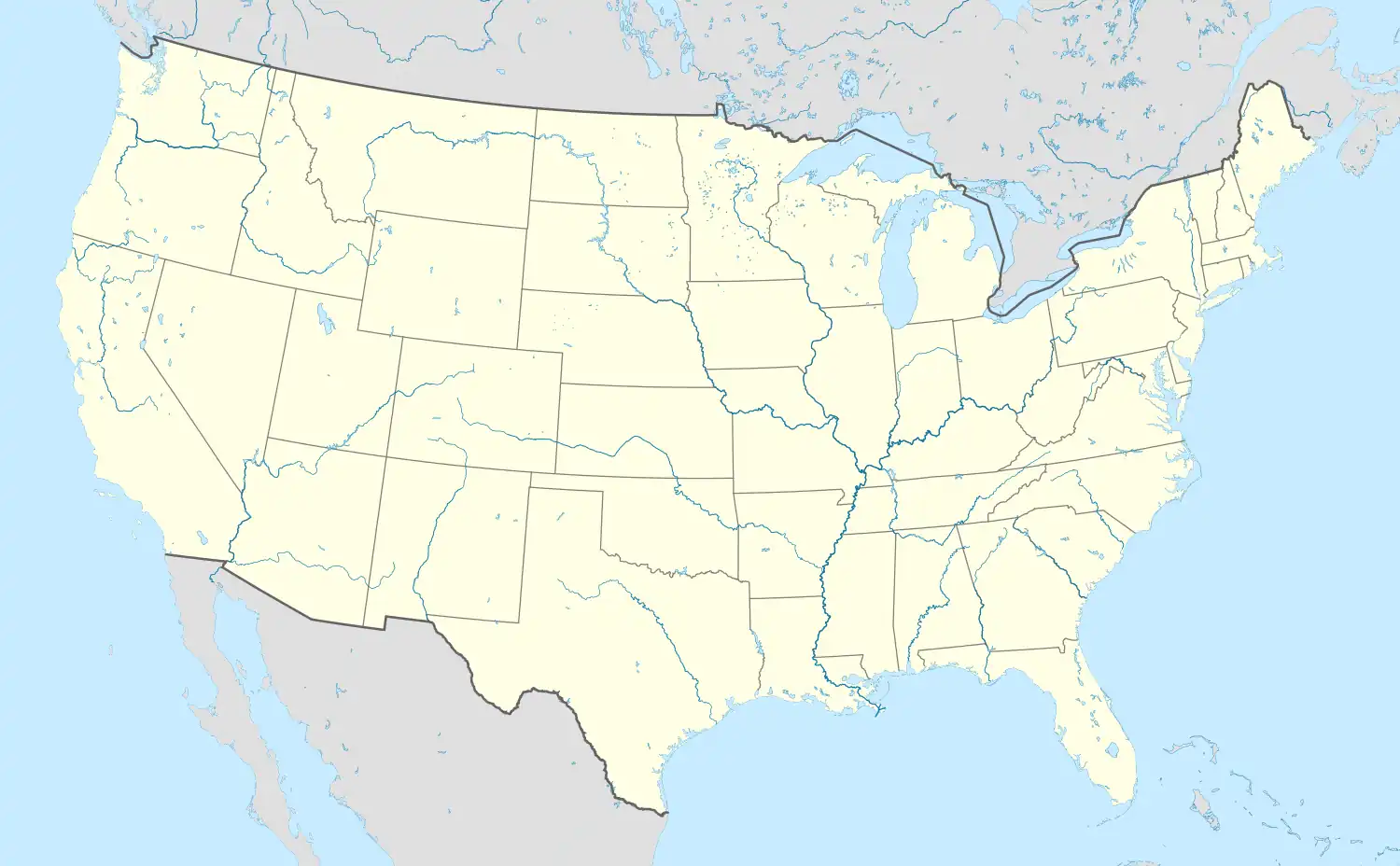 Mount Carmel | |
| Coordinates: 31°38′43″N 89°47′43″W / 31.64528°N 89.79528°W | |
| Country | United States |
| State | Mississippi |
| County | Jefferson Davis |
| Elevation | 492 ft (150 m) |
| Time zone | UTC-6 (Central (CST)) |
| • Summer (DST) | UTC-5 (CDT) |
| GNIS feature ID | 673998[1] |
Mount Carmel is a ghost town in Jefferson Davis County, Mississippi, United States.
Once a thriving 19th-century community, little remains today of Mount Carmel but a museum located within a historic home.
History
Mount Carmel is one of the oldest settlements in Jefferson Davis County.[2]
Mt. Zion Methodist Church was established near Mount Carmel in 1817.[3]
John Ragan, a Revolutionary soldier from Virginia, laid out the town in 1819, in what was then Covington County.[2][4] The plan provided for lots, streets, and a large central square with two springs.[2] Mount Carmel incorporated in 1835, and had two or three stores, and two churches.[2]
The town also had a well-regarded co-educational school, Mount Carmel Academy, which opened prior to 1830. At one point it had 70 to 80 students. The school moved in 1845.[2][5]
Benjamin L.C. Wailes traveled through the community in 1852 and wrote in his journal:
After crossing [the] Bouie over a bridge (passing through the bottom land in which there is a good deal of large oak & gum mixed with some Shortleaf pine) ascended a considerable eminence to a level table land of Oak and hickory, on which the village of Mount Carmel is situated. About 70 inhabitants. Two or three considerable Country Stores. More business [is] done [here] than at Williamsburg, and the situation is much handsomer, & the buildings (tho' plain frame) [are] better.[2]
Around 1873, John Fielding Holloway built a large house in Mount Carmel, and it remains the community's only 19th-century structure.[2]
Mount Carmel was by-passed during the construction of the Gulf and Ship Island Railroad in 1899, and the Mississippi Central Railroad in 1903. As a result, many businesses and residents moved to one of the nearby railway towns of Prentiss, Bassfield, or Collins.[2] In 1904, Mount Carmel was officially unincorporated.[2]
The nearly abandoned community began to grow again during the early 20th century, when African-Americans began purchasing land in the town and surrounding community. The new community began to prosper, and contained all the essential services, goods and farm products needed for self-sufficiency.[2] In 1911, Robert Decatur "Cap" Polk, a leading African-American planter and businessmen, purchased the Holloway House, and installed a large and modern farm on the nearby property.[2] Now called the John Fielding Holloway House, it remains one of the oldest continuously inhabited settlement in Jefferson Davis County. The home is a historical and cultural center, and tours are available.[6]
Notable people
- Raylawni Branch, Civil Rights leader and U.S. Air Force officer; grew up in Mount Carmel.[7]
- Alexander Graves, U.S. Representative from Missouri.[8]
References
- ↑ U.S. Geological Survey Geographic Names Information System: Mount Carmel
- 1 2 3 4 5 6 7 8 9 10 11 "Holloway, John Fielding, House - National Register of Historic Places Registration Form" (PDF). U.S. National Park Service. September 27, 1994.
- ↑ Riner, Steve (November 3, 2001). "Mt. Zion Methodist Church Cemetery". Genforum. Archived from the original on May 4, 2014.
- ↑ "Mt. Carmel". StoppingPoints. June 17, 2006.
- ↑ Biographical and Historical Memoirs of Mississippi, Part 1. Firebird Press. 1891. p. 311. ISBN 9781455601196.
- ↑ "Holloway-Polk House Historical and Cultural Center". Holloway-Polk House Historical and Cultural Center. Retrieved May 3, 2014.
- ↑ "Oral History with Mrs. Raylawni Branch". University of Southern Mississippi. June 13, 2004. Archived from the original on June 13, 2004.
- ↑ "GRAVES, Alexander, (1844 - 1916)". Biographical Directory of the United States Congress. Retrieved May 3, 2014.
External links
Municipalities and communities of Jefferson Davis County, Mississippi, United States | ||
|---|---|---|
| Towns |  Map of Mississippi highlighting Jefferson Davis County | |
| Unincorporated communities | ||
| Ghost town | ||
| Footnotes | ‡This community also has portions in adjacent county or counties | |