kāsēt
See also: kaset
Latvian
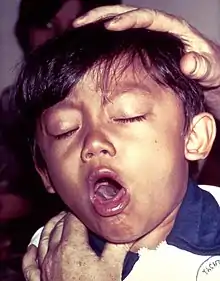
Kāsēt
Etymology
From the same stem as kāss (q.v.), made into a regular 2nd-conjugation verb (ending -ēt).[1]
Verb
kāsēt (intransitive, 2nd conjugation, present kāsēju, kāsē, kāsē, past kāsēju)
- to cough (to produce a sudden noisy burst of air from one's mouth)
- bērns stipri kāsē ― the child is coughing hard
- viņš iebāza pīpē tabaku un aizpīpoja, bet jau pēc pirmā dūma sāka kāsēt ― he put tobacco in his pipe and started smoking, but after the first puff he started coughing
- pēdējā laikā viņa bija vēl vairāk sagurusi un vēl bālāka nekā agrāk, un bieži kāsēja tādu dziļu kāsu ― lately she was even more tired and paler than before, and often coughed a deep cough
Conjugation
conjugation of kāsēt
| INDICATIVE (īstenības izteiksme) | IMPERATIVE (pavēles izteiksme) | ||||
|---|---|---|---|---|---|
| Present (tagadne) |
Past (pagātne) |
Future (nākotne) | |||
| 1st pers. sg. | es | kāsēju | kāsēju | kāsēšu | — |
| 2nd pers. sg. | tu | kāsē | kāsēji | kāsēsi | kāsē |
| 3rd pers. sg. | viņš, viņa | kāsē | kāsēja | kāsēs | lai kāsē |
| 1st pers. pl. | mēs | kāsējam | kāsējām | kāsēsim | kāsēsim |
| 2nd pers. pl. | jūs | kāsējat | kāsējāt | kāsēsiet, kāsēsit |
kāsējiet |
| 3rd pers. pl. | viņi, viņas | kāsē | kāsēja | kāsēs | lai kāsē |
| RENARRATIVE (atstāstījuma izteiksme) | PARTICIPLES (divdabji) | ||||
| Present | kāsējot | Present Active 1 (Adj.) | kāsējošs | ||
| Past | esot kāsējis | Present Active 2 (Adv.) | kāsēdams | ||
| Future | kāsēšot | Present Active 3 (Adv.) | kāsējot | ||
| Imperative | lai kāsējot | Present Active 4 (Obj.) | kāsējam | ||
| CONDITIONAL (vēlējuma izteiksme) | Past Active | kāsējis | |||
| Present | kāsētu | Present Passive | — | ||
| Past | būtu kāsējis | Past Passive | — | ||
| DEBITIVE (vajadzības izteiksme) | NOMINAL FORMS | ||||
| Indicative | (būt) jākāsē | Infinitive (nenoteiksme) | kāsēt | ||
| Conjunctive 1 | esot jākāsē | Negative Infinitive | nekāsēt | ||
| Conjunctive 2 | jākāsējot | Verbal noun | kāsēšana | ||
Synonyms
Derived terms
- prefixed verbs:
- atkāsēt
- izkāsēt
- nokāsēt
- pakāsēt
- sakāsēt
Related terms
References
- Karulis, Konstantīns (1992) “kāsēt”, in Latviešu Etimoloģijas Vārdnīca (in Latvian), Rīga: AVOTS, →ISBN
This article is issued from Wiktionary. The text is licensed under Creative Commons - Attribution - Sharealike. Additional terms may apply for the media files.