ܡܐܢܝ
Classical Syriac
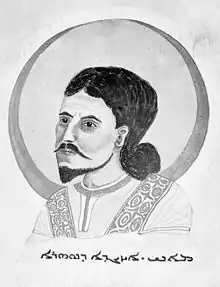
ܡܐܢܝ ܚܝܐ
Etymology
(This etymology is missing or incomplete. Please add to it, or discuss it at the Etymology scriptorium.)
Pronunciation
- IPA(key): [mani], [mɑni]
Derived terms
- ܡܐܢܝ ܐܝܙܓܕܐ ܕܢܘܗܪܐ (mānī ʔizɡaddā dnuhrā, “Mani the messenger of light”)
- ܡܐܢܝ ܚܝܐ (mānī ḥayyā, “living Mani”)
- ܡܢܝܢܝܘܬܐ (manīnāyūtā, “Manicheasim”)
- ܡܢܝܢܝܐ (manīnāyā, “Manichaean”)
Descendants
Further reading
 ܡܐܢܝ on the Aramaic Wikipedia.Wikipedia arc
---
ܡܐܢܝ on the Aramaic Wikipedia.Wikipedia arc
---
This article is issued from Wiktionary. The text is licensed under Creative Commons - Attribution - Sharealike. Additional terms may apply for the media files.